

Ellora Caves is a rock-cut complex north-northwest of Aurangabad, with Buddhist, Hindu and Jain monuments carved into a basalt cliff. A day trip lets you see the cave groups and focus time on Kailasa Temple, the site’s large monolithic excavation.
- Location: 30 km north-northwest of Aurangabad.
- Transport: buses, taxis and private vehicles serve the caves.
- Weekly closing day: Tuesday.
- Entry: Rs. 40 per head for visitors from India, SAARC countries and BIMSTEC countries; children below 15 years enter free.
Prices and times checked November 2026.
What makes Ellora Caves a full-day outing
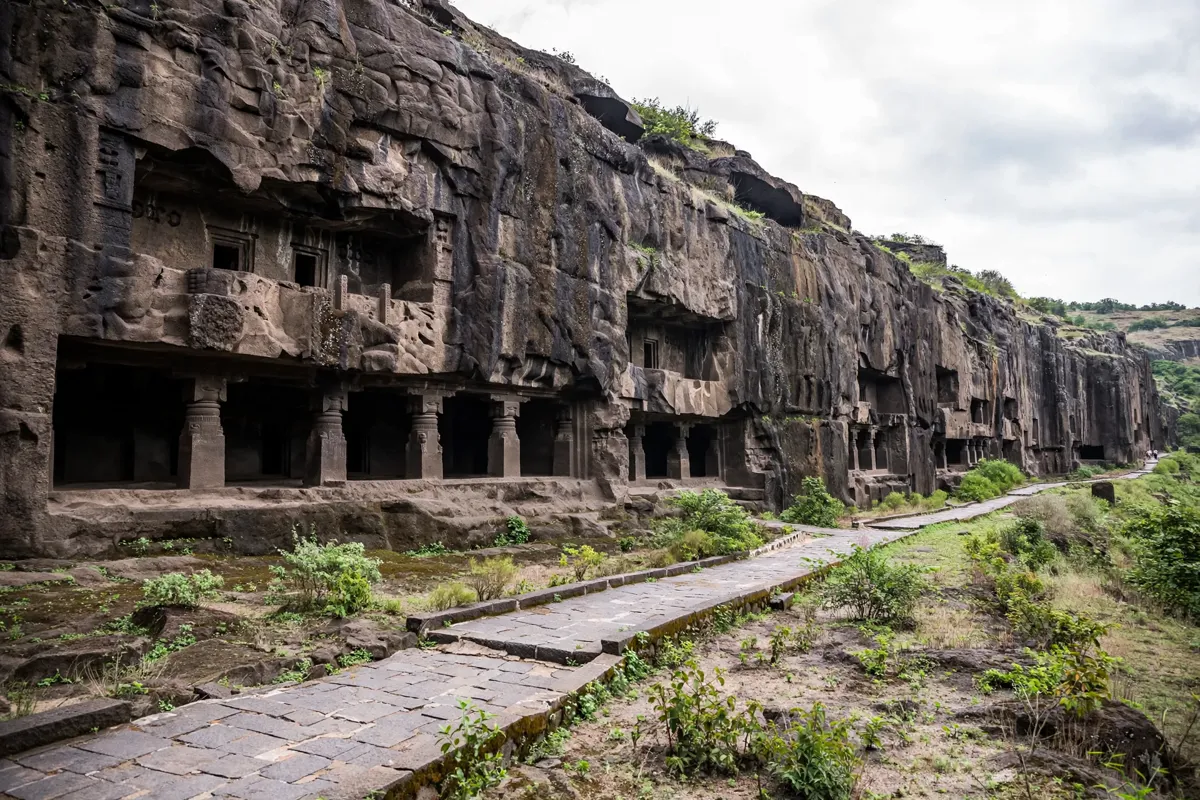
Ellora Caves is a large religious and architectural complex with 34 monasteries and temples cut into a high basalt cliff. Its Buddhist, Hindu and Jain monuments were excavated across three phases, from the 6th to the 12th centuries.
The caves are arranged in three groups: Buddhist caves to the south, Brahmanical caves in the centre and Jain caves to the north. That layout gives you a natural way to understand the site: move between the groups and notice how their architecture and religious imagery differ.
The Buddhist group includes chaityas and viharas. Jain caves in the northern group feature Tirthankara images and intricate detailing. In the centre, the Brahmanical group includes Kailasa Temple, the focal point for many visits.
Daulatabad Fort and Grishneshwar Jyotirlinga Temple are among the attractions around Ellora. If you are planning a wider heritage itinerary, the route and visit guide to Daulatabad Fort covers another nearby stop.
How do you get from Aurangabad to Ellora Caves?
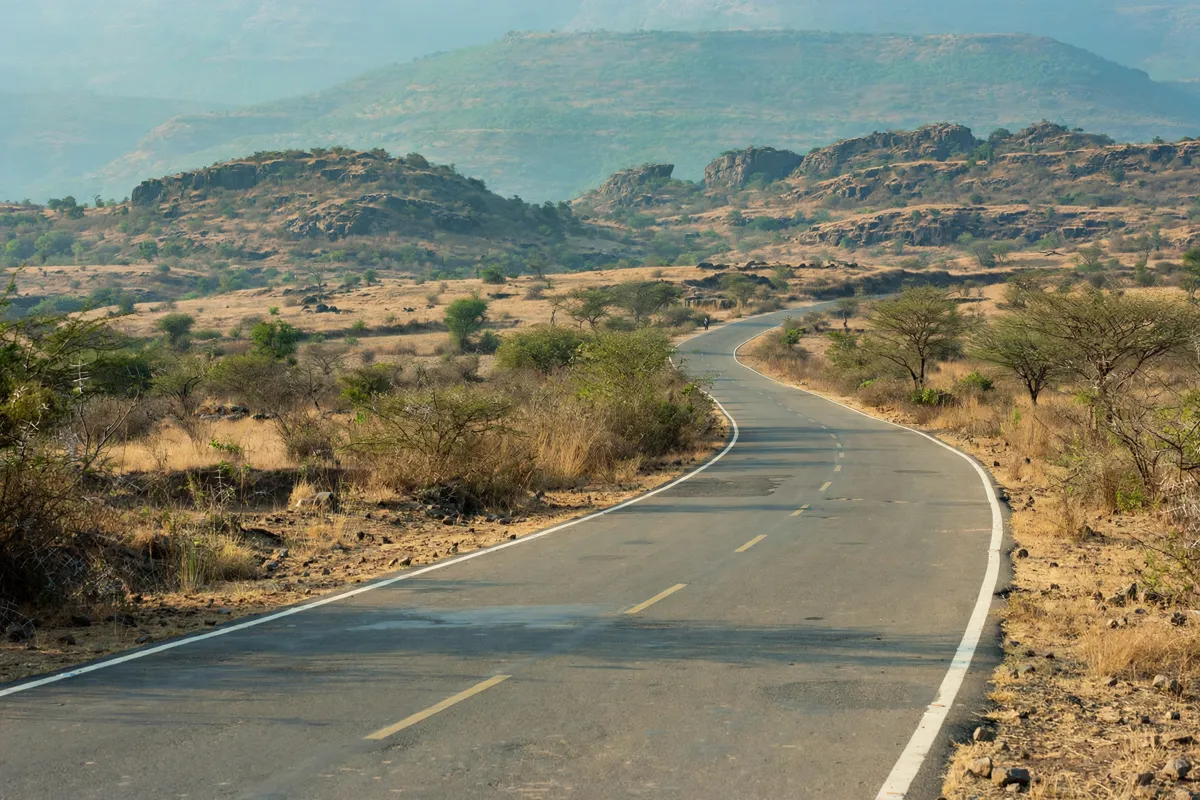
Ellora Caves lies on the Aurangabad–Chalisgaon road, with the road distance from Aurangabad given as 31 km. You can travel to the caves by bus, taxi or private vehicle; transport is also available from Aurangabad’s main railway and bus stations.
For the simplest plan, decide first whether you want to use public transport or arrange a taxi or private vehicle.
Then allow enough time at the caves to visit more than one group, rather than treating the trip as a quick stop. The approach road makes Ellora a practical excursion from Aurangabad, but the site itself has several distinct areas to explore.
Grishneshwar Jyotirlinga Temple is another attraction around Ellora. The Grishneshwar Temple visit guide can help you plan that addition to your day.
Seeing the Kailasa Temple and cave groups
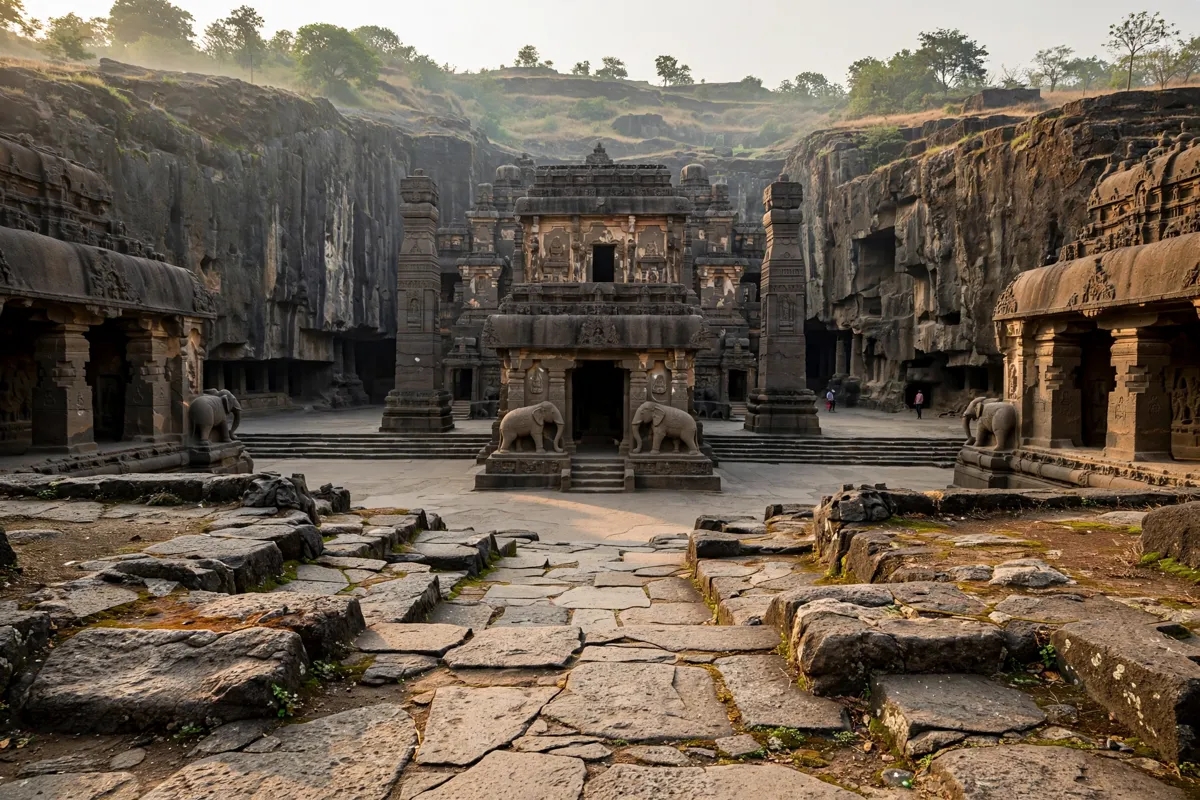
Kailasa Temple, also called Cave 16, is a monolithic temple dedicated to Shiva and the signature stop in the central Brahmanical group. It is the world’s largest single monolithic excavation.
The temple’s courtyards, pillars, sculptures and carvings reward a closer look. Some carvings depict stories from the Ramayana and Mahabharata, bringing epic narratives into the stonework. Take in the structure as a whole, then look at the details across its courtyard and carved surfaces.
After Kailasa, continue to the southern Buddhist group and northern Jain group if time allows. Seeing all three gives context to the site’s range: Buddhist chaityas and viharas, the central Brahmanical monuments, and Jain imagery and detailing in the north.
The UNESCO-listed site is in Verul Village, Khulatabad Taluk, Aurangabad District, Maharashtra. Its setting and the scale of the cliff-side complex are part of what makes the visit distinct from seeing a single temple.
Tickets, opening days and visitor access
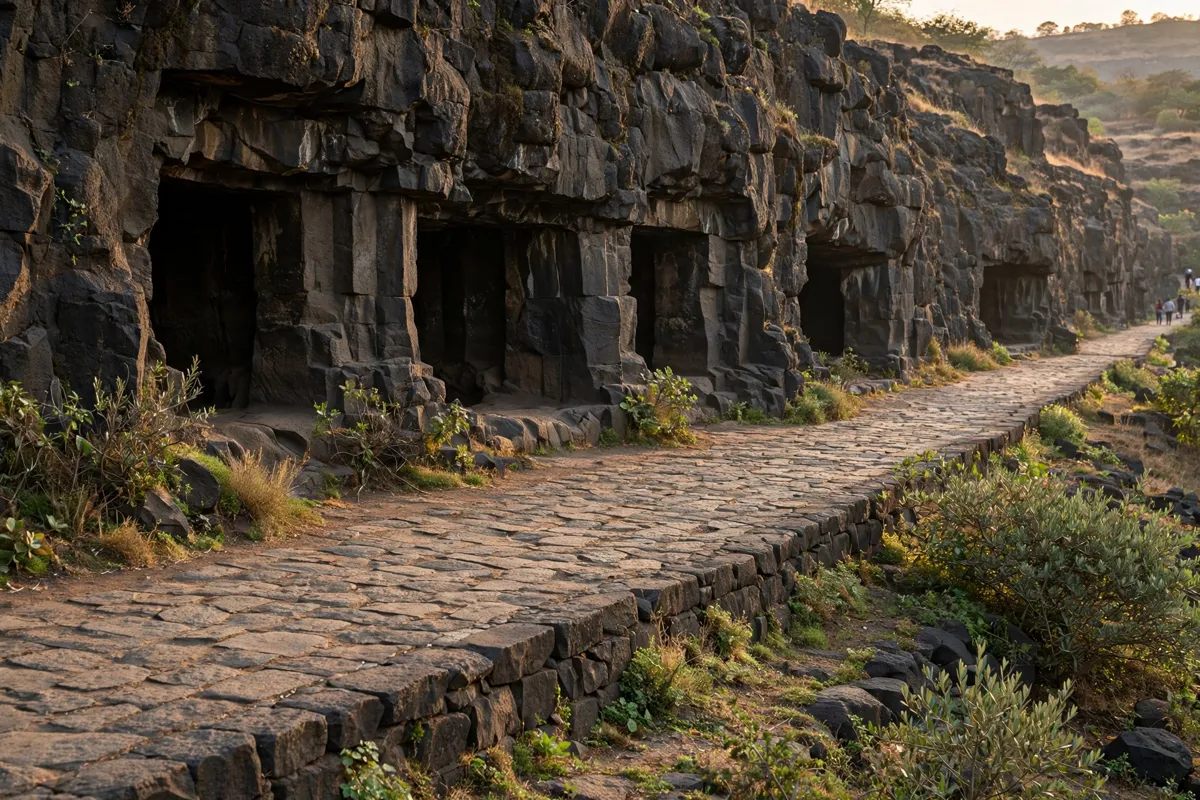
The caves are closed on Tuesdays. Children below 15 years enter free. For visitors from India, SAARC countries and BIMSTEC countries, the entry fee is Rs. 40 per head.
The online-payment fee for other foreign visitors is Rs. 550. Check the official site before you go for current entry information and visitor access details.
Maharashtra Tourism recommends October through March as the best time to visit and identifies June through September as the monsoon season. During the monsoon, streams fill with rainwater and the surroundings turn lush green, making this a particularly enjoyable time to visit.
FAQs
How many caves are at Ellora?
The complex has 34 monasteries and temples. They are grouped as Buddhist, Brahmanical and Jain monuments.
What is special about Kailasa Temple?
Kailasa Temple is Cave 16, a monolithic temple dedicated to Shiva. It is the largest single monolithic excavation in the world.
Which day is Ellora Caves closed?
The caves are closed on Tuesdays. Check the official site before you go for current visitor information.
Can you visit Ellora during the monsoon?
Yes. Rainwater fills the site’s streams, and the surroundings are lush green during the monsoon.